Huawei has officially initiated the HarmonyOS 7 Beta recruitment phase, accompanied by a series of capability demonstrations for its system-level AI assistant, Xiaoyi. The updates emphasize a transition toward an agentic execution model, prioritizing cross-device interoperability, complex intent understanding, and long-term memory.
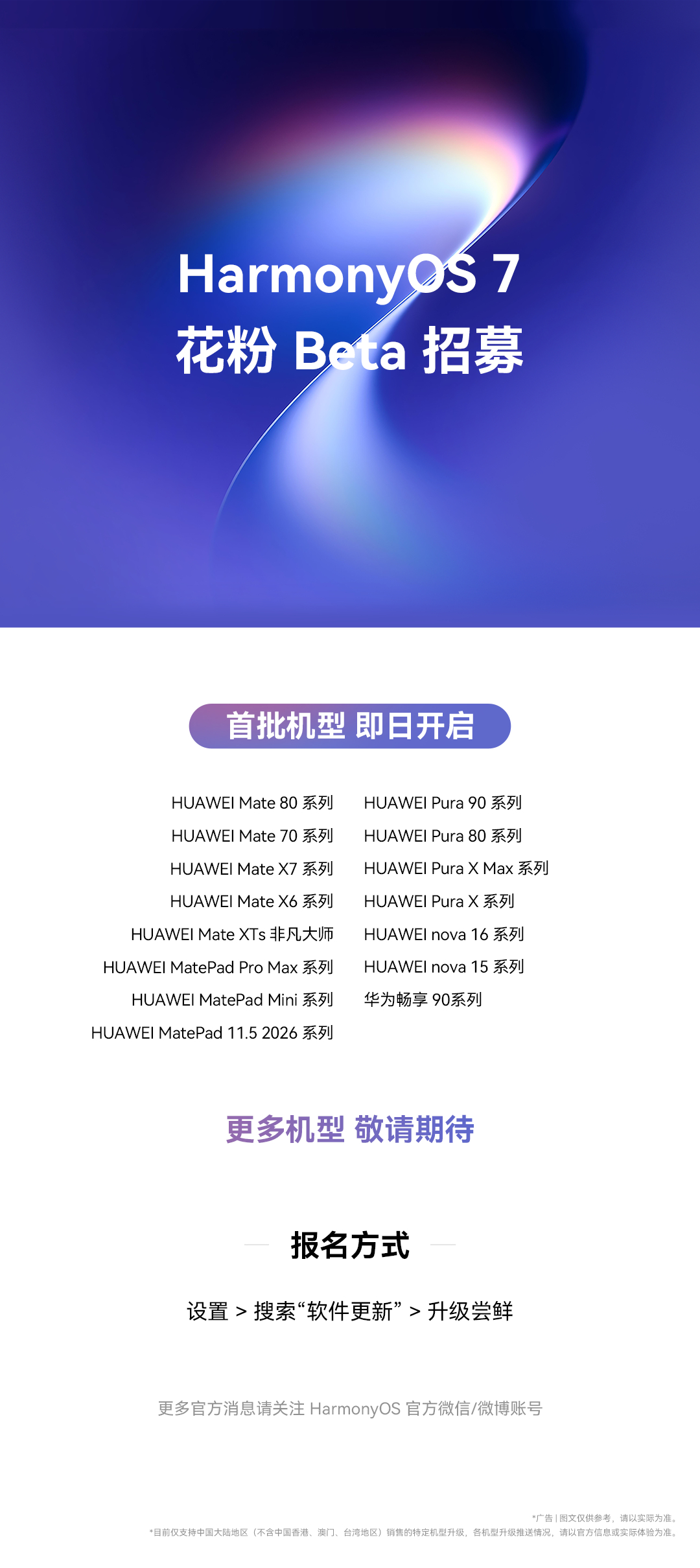
1. HarmonyOS 7 Beta Recruitment
Source: HarmonyOS Official Weibo (July 28, 2026)
Huawei announced the first wave of beta recruitment for HarmonyOS 7. The official promotional material confirms initial compatibility with the company's latest flagship hardware ecosystem. Supported devices prominently feature the upcoming Huawei Mate 80 series, Pura 90 series, nova 16 series, and MatePad Pro Max.
2. Xiaoyi Core AI Capabilities: Agentic Execution
Source: HarmonyOS Official Weibo (July 28, 2026)
A published video demonstration highlights the assistant's enhanced natural language execution capabilities. The footage illustrates Xiaoyi resolving complex user intents through single-prompt commands, effectively acting as a system-wide agent that orchestrates multiple built-in services and APIs.
Demonstrated use cases in the video include:
- Party Preparation & Travel Planning: Automatically parsing context to coordinate calendar events, reminders, and relevant third-party services.
- Cross-Device Transmission: Leveraging HarmonyOS's proprietary distributed capabilities to seamlessly move digital assets between phones and tablets based on voice commands.
- Competition Training: Setting up customized multi-step timers, health tracking, and music playlists in a single flow.
3. Scenario-Driven AI and Long-Term Memory
Source: HarmonyOS Official Weibo (July 31, 2026)
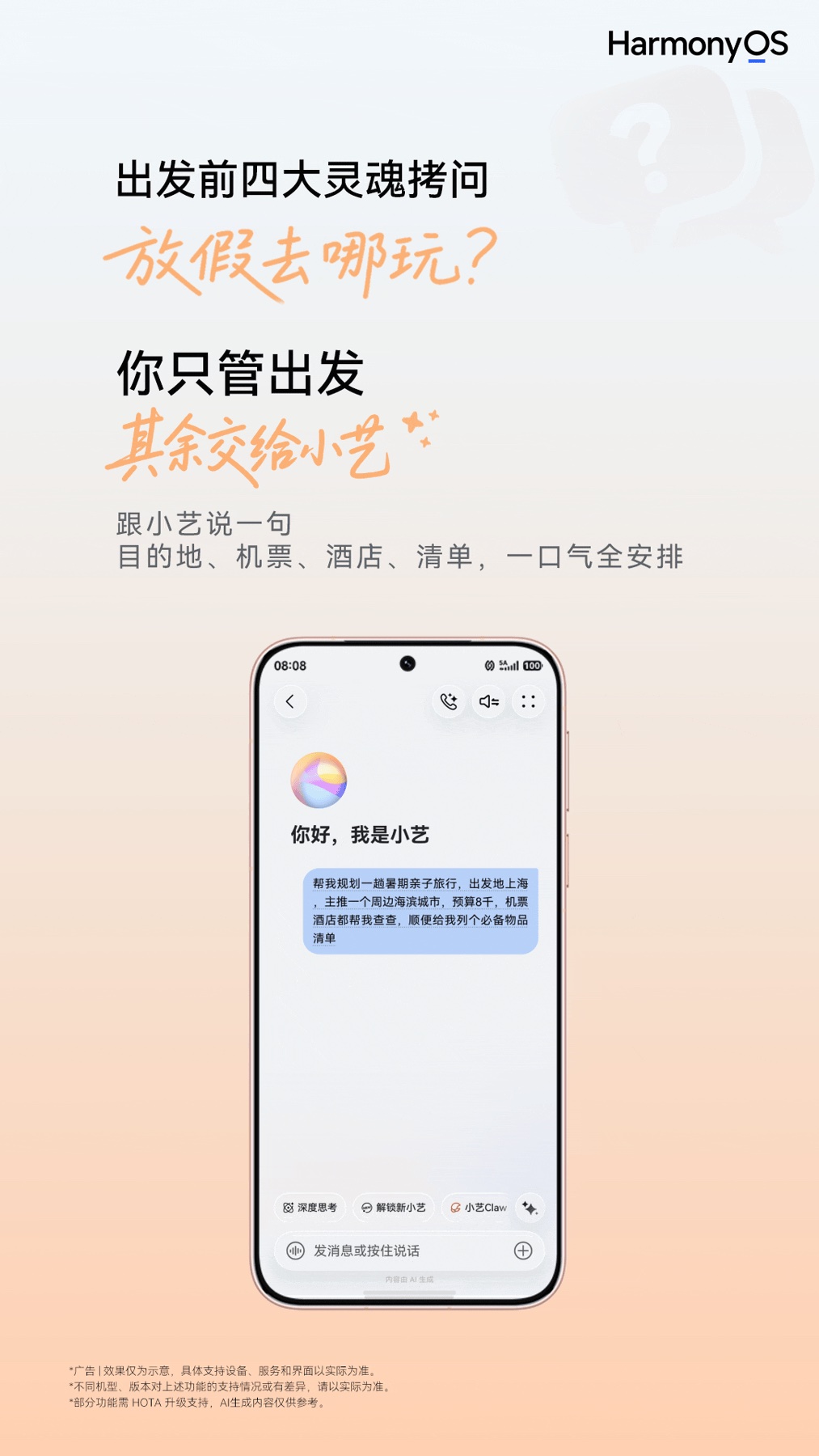
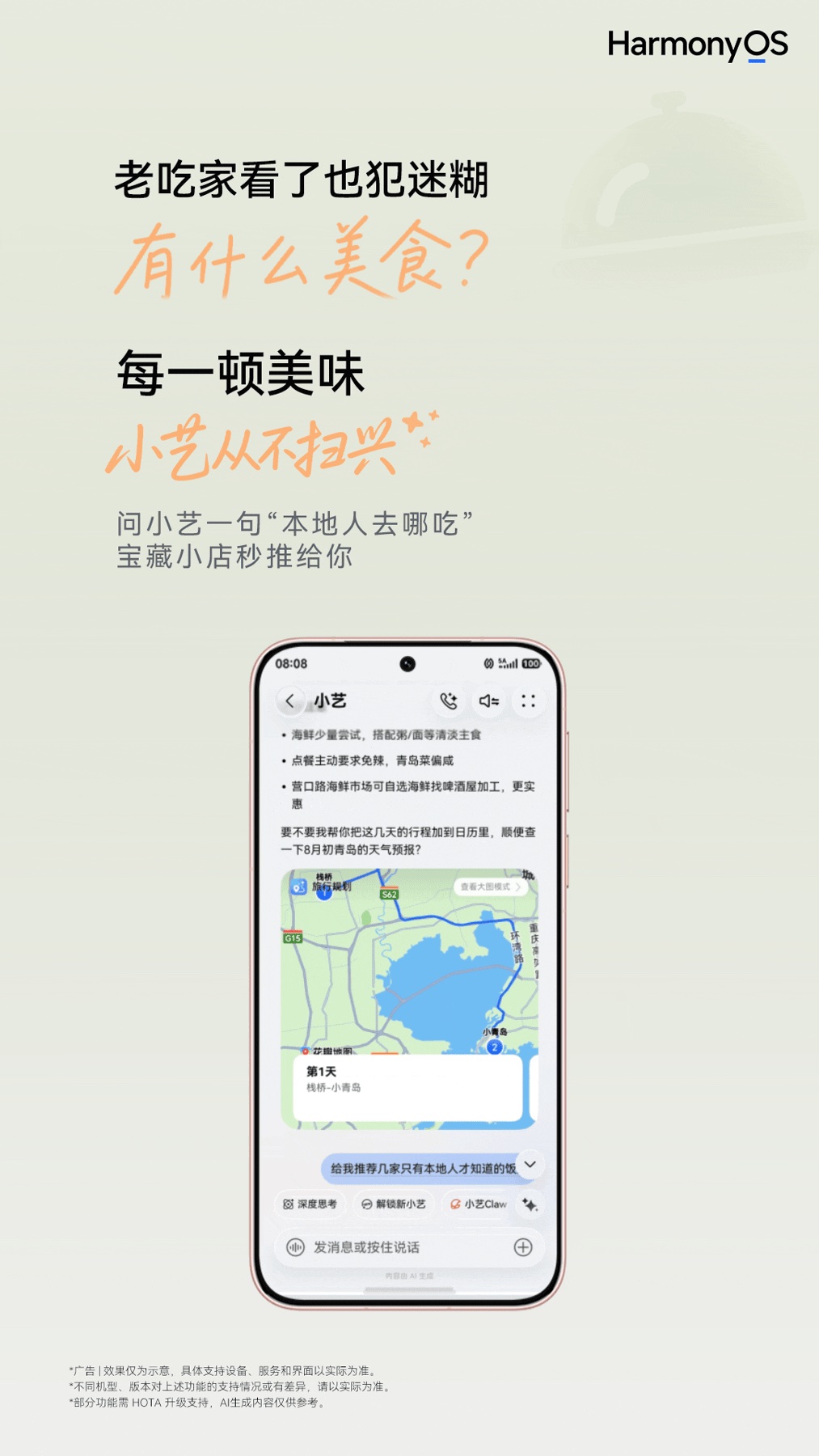
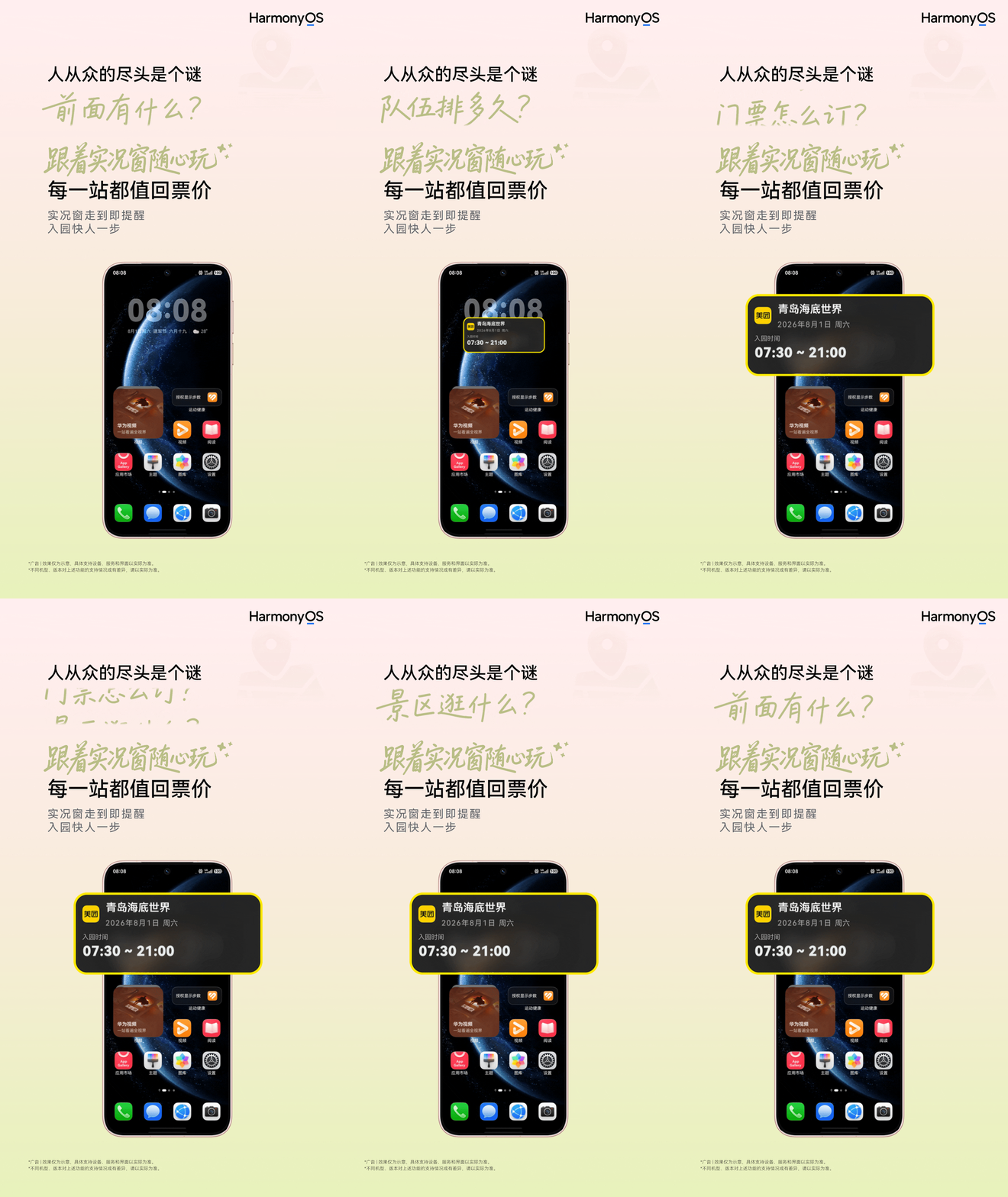
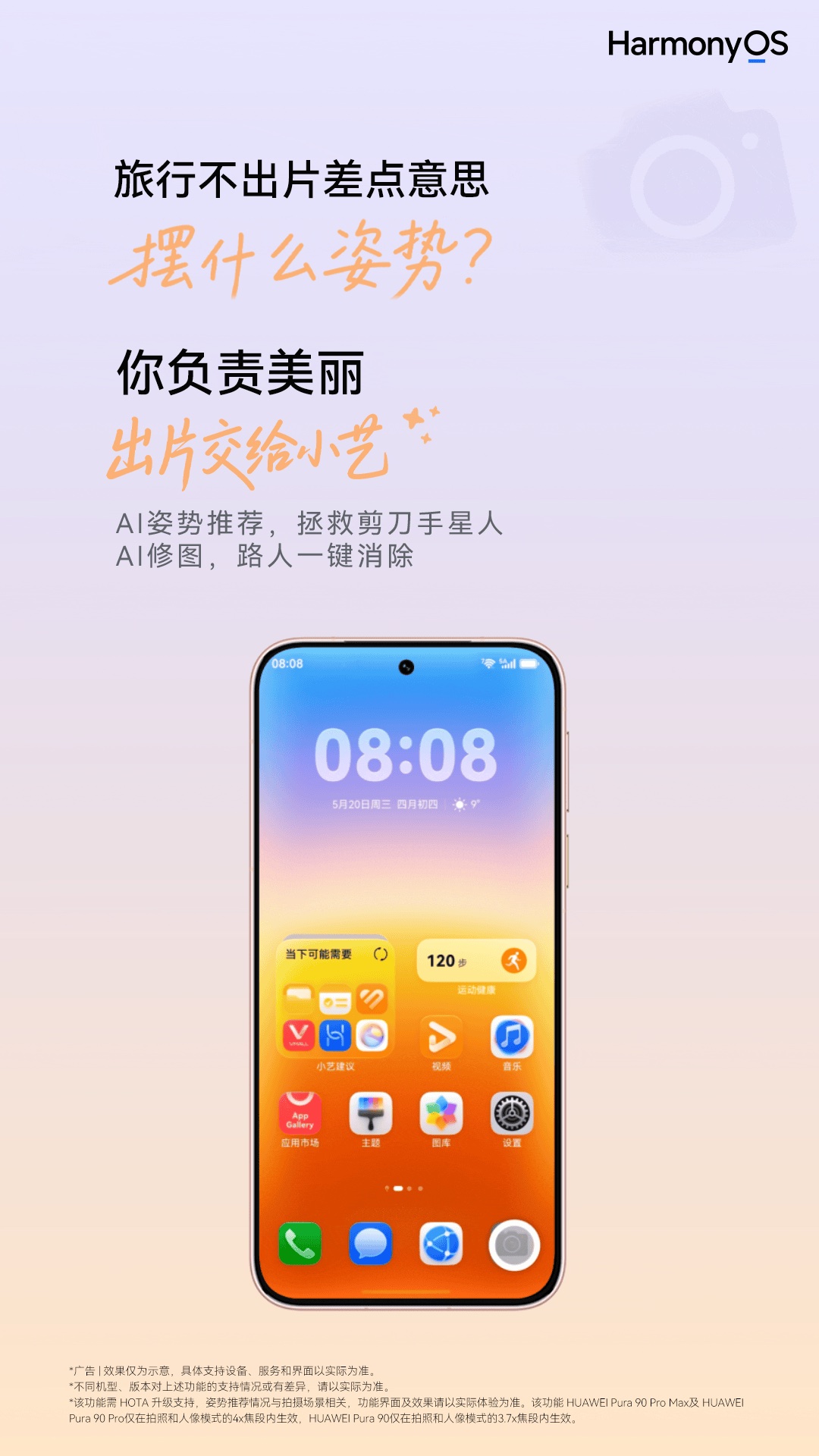
Through a sequence of interface screenshots, Huawei detailed Xiaoyi's contextual awareness and orchestration capabilities within a specific "summer travel" scenario. The assistant is shown seamlessly linking what would traditionally be disparate tasks.
- Task Chaining: Generating a comprehensive travel itinerary, initiating direct navigation routes, providing localized dining recommendations, and offering real-time photography guidance.
- Long-Term Memory: Crucially, the interface explicitly highlights Xiaoyi's personalization engine (marketed as "understanding you better over time"). The system utilizes previously stored user preferences and historical interactions to inform its current recommendations, moving beyond stateless query-response loops.